

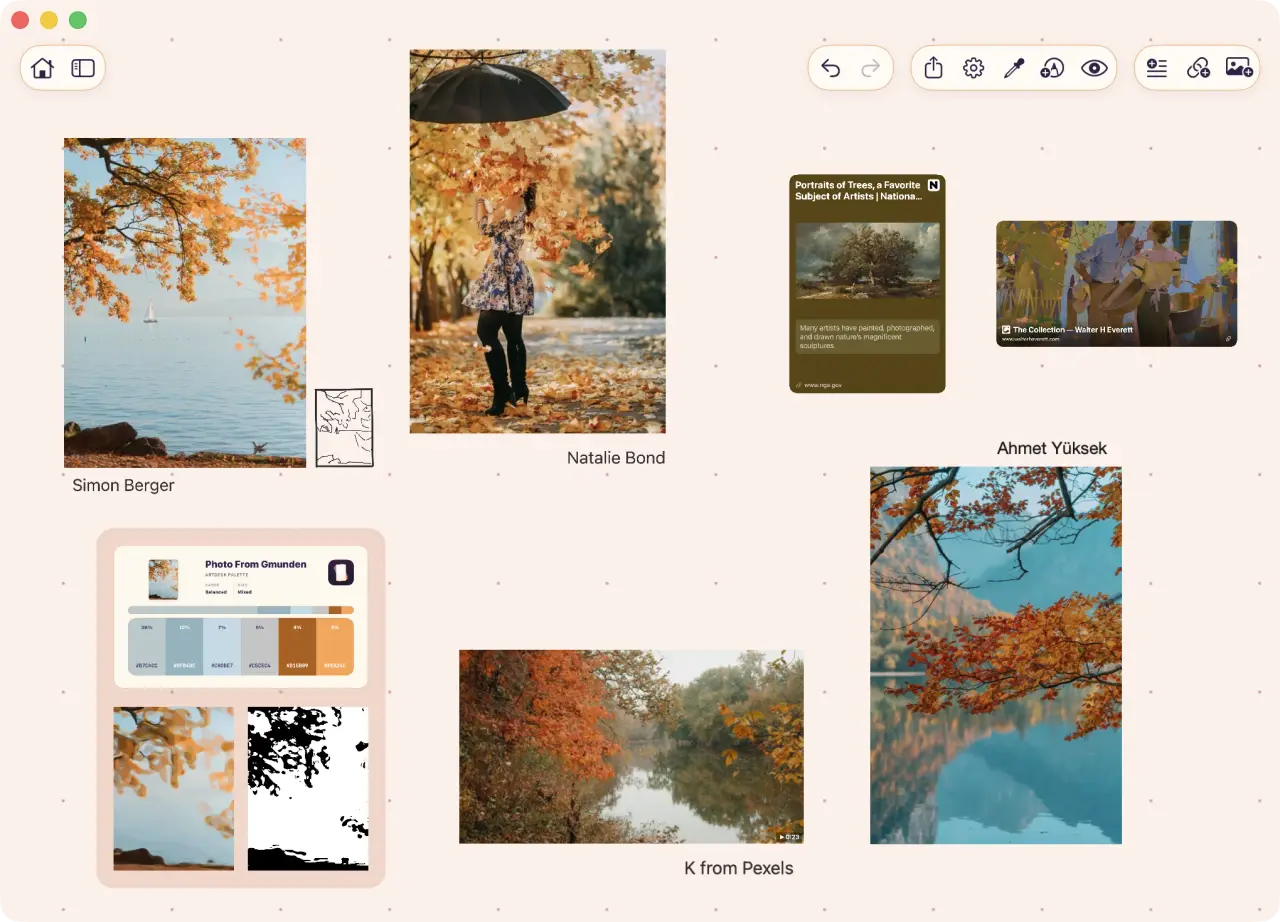
The short answer
If anyone else needs to edit the board, use Freeform. Its core editor is free, other people edit it live, and it runs on Apple Vision Pro and on older systems ArtDeck does not support.
If the board is yours, ArtDeck keeps the references together on iPhone, iPad, and Mac, gives each board its own theme, syncs or stays local per board, and puts study tools over the images. Put the same thirty images in both. ArtDeck’s seven-day trial unlocks everything without a card, so neither test costs anything.
Freeform vs ArtDeck, side by side
| Decision | ArtDeck | Apple Freeform |
|---|---|---|
| What it is for | A personal reference board for keeping visual material close while you work, with per-board themes and built-in tools for value, color, composition, and motion. | A shared whiteboard for putting material and ideas on a canvas that other people can edit with you in real time. |
| Price | A free 7-day trial unlocks every feature without a card and does not renew. One in-app purchase unlocks the app permanently. | The core editor is free. An Apple Creator Studio subscription adds premium content, Auto Crop, Super Resolution, and image generation. |
| Platforms | iPhone, iPad, and Mac, on iOS 18, iPadOS 18, or macOS 15 and later. | iPhone, iPad, Mac, and Apple Vision Pro. Creator Studio features need newer software, and some also need newer hardware. |
| What a board holds | Images, video, GIFs, link cards with previews, notes, PDFs, drawings, saved studies, and nested groups. | Photos, video, audio, documents, PDFs, links, sticky notes, tables, and over 700 shapes. |
| Edit with other people | No. No multi-user editing. Boards still sync between your own iPhone, iPad, and Mac. | Yes. Real-time editing with others, shared by link or email. |
| Storage | Chosen per board, and works offline either way. Keep every board in iCloud, leave a heavy project on one device with its full media, and clear ArtDeck's iCloud data from inside the app when you need the space back. | One switch for the whole app. Every board syncs through iCloud when it is on, and a device with it off cannot reach those boards. |
| Study tools | Yes. Values and Notan, color and palettes, composition, readability, measurement, and motion study with onion skinning. Save studies on the board. | No. Video playback and Creator Studio image edits, but no analysis suite or onion skinning. |
What Freeform is built for
Apple built Freeform for brainstorming and collaboration. People edit a board in real time, follow each other’s cursors, and jump to Messages or FaceTime from the same controls, and scenes present selected parts of a large canvas. A Freeform reference board holds photos, video, audio, documents, PDFs, website and map links, sticky notes, tables, and more than 700 shapes, with Apple Pencil drawing, brushes, crayon, fill, and Scribble. The core editor is free, and Apple Creator Studio adds premium content, Auto Crop, Super Resolution, and image generation by subscription.
ArtDeck has no multi-user editing, so a Freeform mood board that a team edits, or an art direction review, belongs there. Shared boards are an ArtDeck roadmap candidate, not a shipped feature. ArtDeck draws and annotates with Apple Pencil or touch, without shapes, connectors, or tables.
If everything you need is somewhere on that list, Freeform is the answer.
Study starts after collection
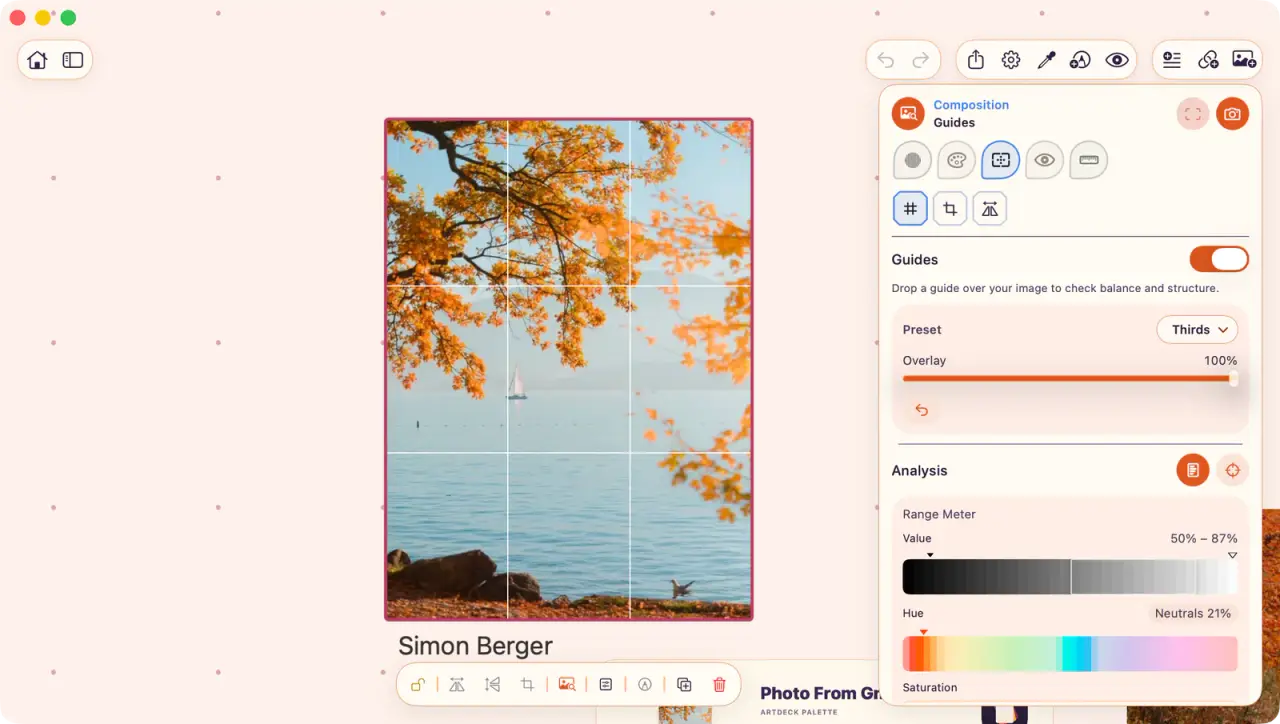
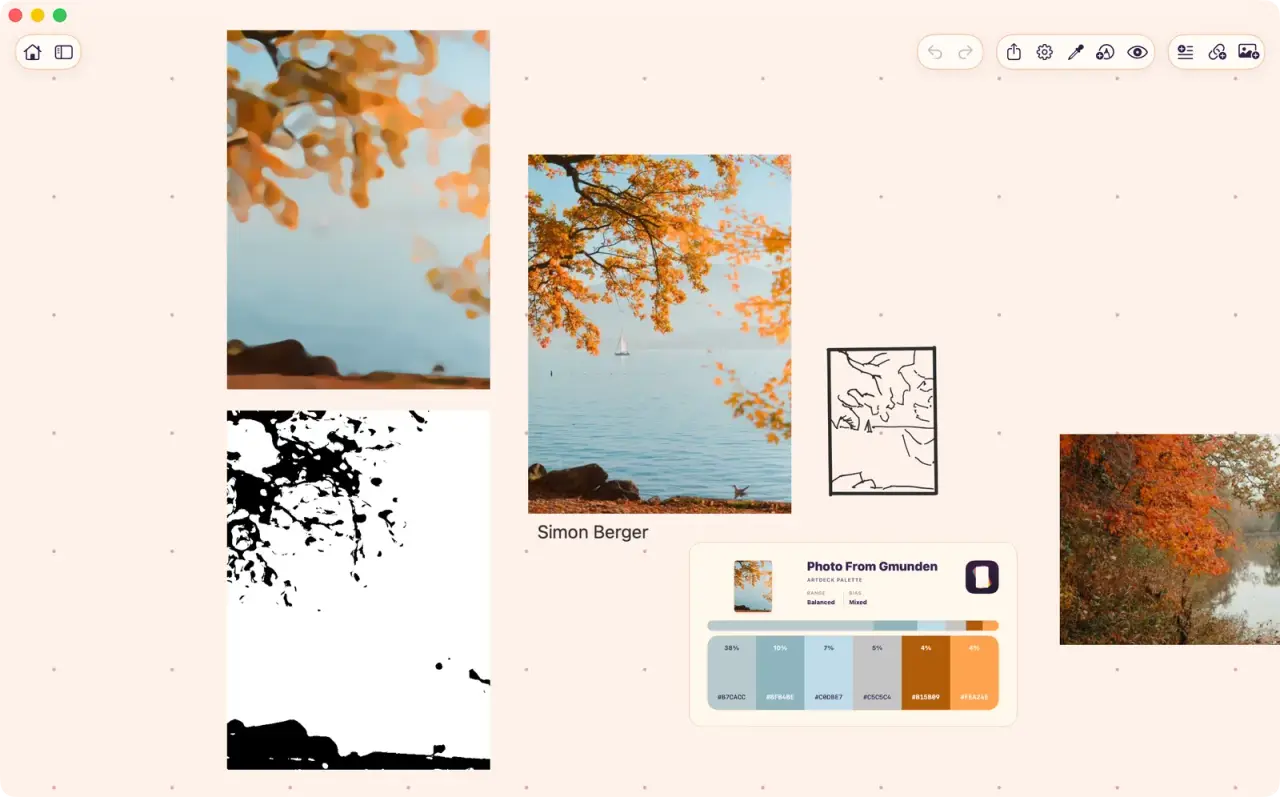
ArtDeck includes five study lenses in the ToolBox panel. Values shows grayscale, a value ladder, and Notan. Color extracts a palette and maps temperature. Composition overlays grids and a viewfinder crop, and Measure adds plumb lines and ratios. The controls open over an item without altering the source, and the result saves next to the original. That can be deliberate practice, such as checking a value grouping you got wrong, or plain curiosity about why a picture caught your eye. The study tools page shows each lens.
Freeform can crop or mask a photo, and Creator Studio’s Auto Crop suggests a new composition. It has no value bands, palette proportions, composition overlays, measurement, or histograms.
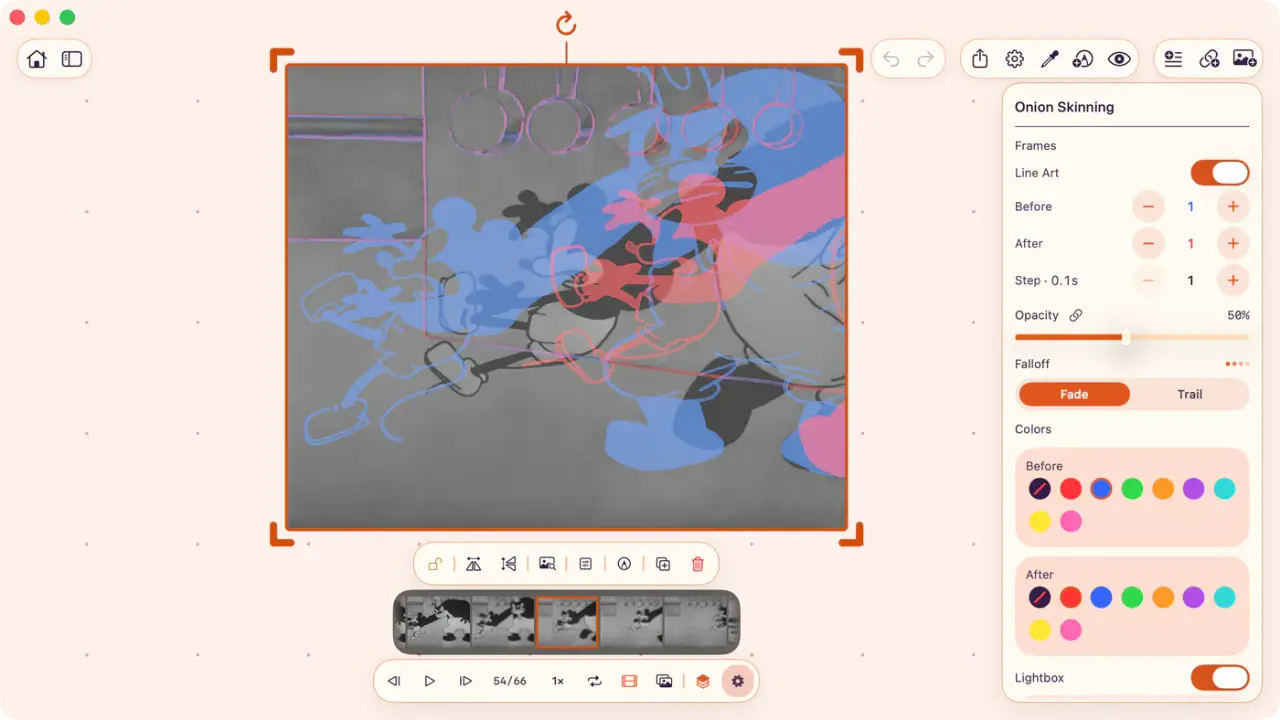
ArtDeck plays video and GIFs with playback speed, frame stepping, and onion skinning, as the motion study page shows. Freeform plays clips, without speed control, frame stepping, or onion skinning.
If the board outlives the project, get the originals out. Freeform sends an editable copy by link or exports the canvas as a PDF, and neither writes every embedded original as a separate file, though the assets sit as ordinary files inside its container on a Mac and a short script reads them back out. ArtDeck exports selected items as their own files, or packages the whole board as a restorable .artdeck file.
Boards in the cloud, or boards on the device
ArtDeck chooses storage per board and works offline either way. Keep everything in your own iCloud, or leave one heavy project on a single device with its full media, with no ArtDeck account in the middle. With app-level sync off, ArtDeck can delete its own iCloud data from App Settings, and boards already on the device stay where they are. The full sequence puts the checks before the deletion.
Freeform’s iCloud setting is one switch for the whole app. On, every board syncs through iCloud to your other devices, with a local copy on each device once it has loaded there. Off, Freeform’s settings send you to encrypted device backups, and a device with it off cannot reach the iCloud boards. There is no per-board choice and no command that brings an iCloud board back into local-only storage, which matters once a project carries a few gigabytes of embedded video.
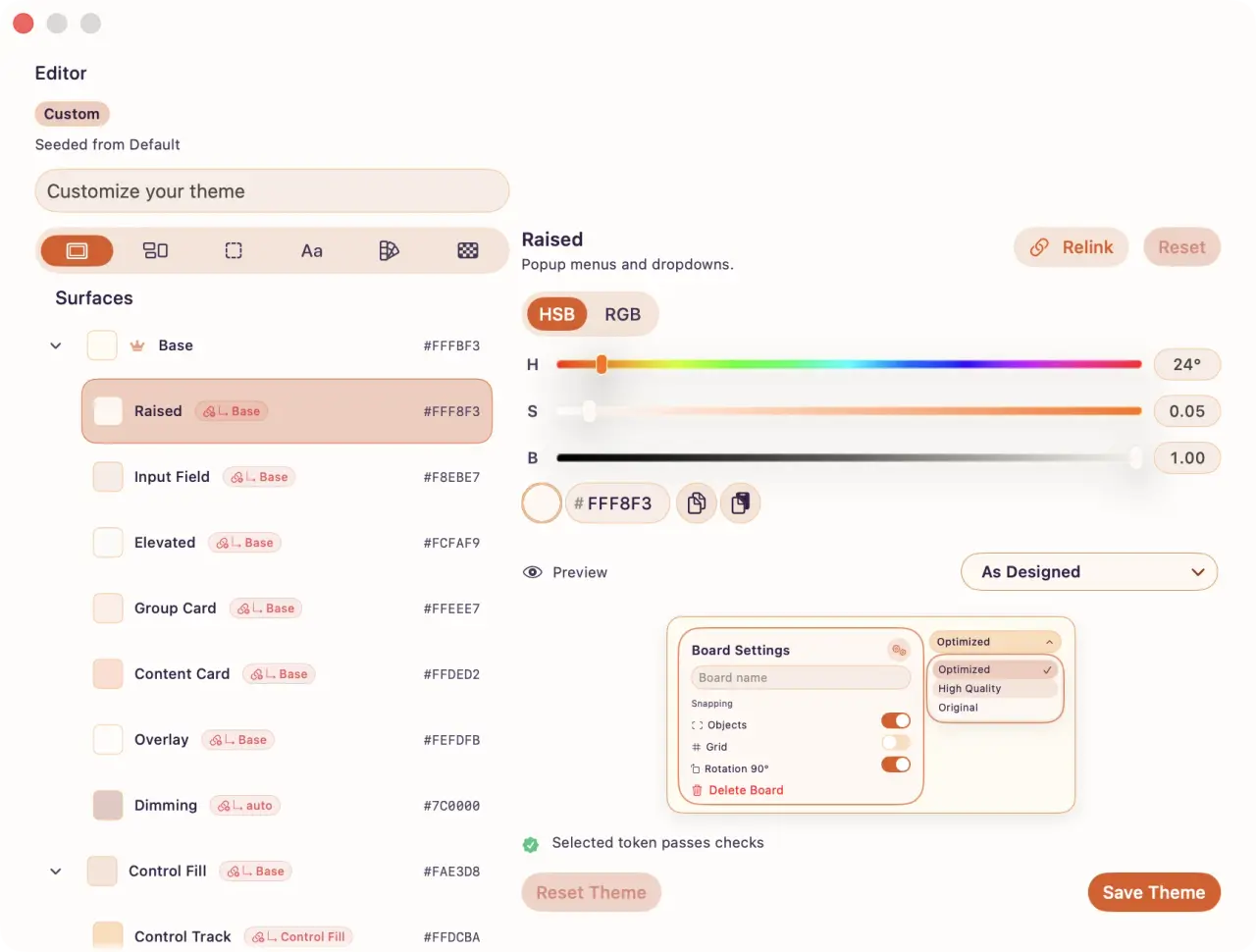
ArtDeck also lets each board use its own theme. One project can stay light and warm, another dark or high contrast, and changing one board does not change the rest.
Choose based on what the reference is for
Two tools, two jobs
Apple Freeform shared whiteboard
- Anyone else needs to see or edit the board.
- The canvas is mostly diagrams, sticky notes, or presentation scenes.
- Your devices cannot run iOS 18 or macOS 15, or you are on Vision Pro.
- You need a shared board whose core editing remains free without a time limit.
ArtDeck personal reference board
- The board is yours, and you want to learn something from the images on it.
- You want each board to have its own theme and arrange it for your own eye.
- Video reference needs frame-level control, not plain playback.
- You want the references on your own iPhone, iPad, and Mac, with iCloud sync chosen per board.
- You want to keep studies and references together.
Using both is reasonable: Freeform for the canvas a team edits, ArtDeck for the personal references and studies behind the work. The reference board page shows how that personal canvas is organized.
Common questions
Is Apple Freeform good for art reference boards?
Yes. A Freeform board holds photos, video, PDFs, and links on an infinite canvas across iPhone, iPad, Mac, and Apple Vision Pro, and the core editor is free. It has no tools for value grouping, palette extraction, measurement, or frame stepping.
Is there an Apple Freeform alternative for reference boards?
For a personal reference board, ArtDeck. It keeps images, video, links, notes, and saved studies together, syncs per board, and adds the study tools. For a canvas a team edits, keep Freeform.
Can Freeform analyze an image, pull a palette, or check values?
Apple Creator Studio adds Auto Crop suggestions and Super Resolution to Freeform, and that is where its image tools stop. Extracting a palette, reducing an image to value bands, measuring proportions, or reading histograms needs a second app, and ArtDeck includes them as built-in study tools.
Is Freeform really free?
The core app is free. Apple Creator Studio is an optional subscription that unlocks premium content, Auto Crop, Super Resolution, and image generation in Freeform. Creating, editing, and collaborating without those features still costs nothing.
Can I get my images back out of a Freeform board?
Apple documents sending a board copy and exporting a PDF. On a Mac the originals also sit as files inside Freeform’s container, and the export workflow above reads them out. Keep reusable originals in Photos or Files so the board is not their only home.
Do I need ArtDeck if I already use Freeform?
Not for shared canvases, diagrams, sticky notes, or presentation scenes. Choose it for a board you keep open while you work, with per-board themes and value, color, composition, proportion, and motion controls on the references themselves.