

Compare the current options
Every reference app here is judged on the same three things: where it runs, what the board can hold, and what you can do with a reference once it is there.
| App | Native iPad | Platforms | Media | Study tools | Price model |
|---|---|---|---|---|---|
| ArtDeck | Yes | iPhone, iPad, Mac | Images, GIFs, video, PDFs, links, notes | Yes | 7-day trial, then one purchase |
| PureRef | No | Windows, Mac, Linux | Images and GIFs | No | Personal pay-what-you-want; separate commercial licenses |
| Refbox | Yes | Windows, Apple-silicon Mac; separate iPhone/iPad app | Desktop: images, video, GIFs, 3D, PDFs, links. Mobile: images | No | Desktop trial, then one purchase; mobile free |
| VizRef | Yes | iPad, Apple Vision; separate VizRef Lite for iPhone | Images and GIFs | No | Paid app; Lite sold separately |
| ImgRef | Yes | iPhone, iPad, Mac, Apple Vision | Images, GIFs, MP4 video, text; notes and link cards with Pro | No | Free base canvas; most controls by subscription |
| Eagle | No | Windows, Mac | Images, video, audio, PDFs and other asset formats | No | 30-day trial, then a perpetual license |
| Reference Board | Yes | iPhone, iPad, Mac, Apple Vision; OS 26+ | Images, video, GIFs, YouTube, notes | No | One-time purchase |
| Freeform | Yes | iPhone, iPad, Mac | Images, video, PDFs, links, notes | No | Free core editor |
| Milanote | Yes | Web, desktop and mobile apps | Images, video, GIFs, PDFs, links, notes | No | Limited free tier; paid subscriptions |
If your iPad is older, check the minimum version: ArtDeck needs iPadOS 18, VizRef 13.2, ImgRef 15.6, Reference Board 26, and Refbox Mobile 26.2.
The Study tools column means a full set of analysis tools: values and Notan, color and palettes, composition, readability, measurement, and motion study with onion skinning. A grayscale toggle, a color picker, or frame stepping alone does not count.
ArtDeck and Refbox work locally and offline, while Milanote’s mobile apps need a connection.
A shortlist for your workflow
If you draw on an iPad, PureRef and Eagle are out and Refbox is only an image viewer there, which leaves ArtDeck, VizRef, ImgRef, Reference Board, Freeform, and Milanote.
On Windows or Linux, the reference board software is PureRef or Refbox. For a desktop archive of thousands of files, it is Eagle, on its own or feeding an ArtDeck board.
Keep references next to another app
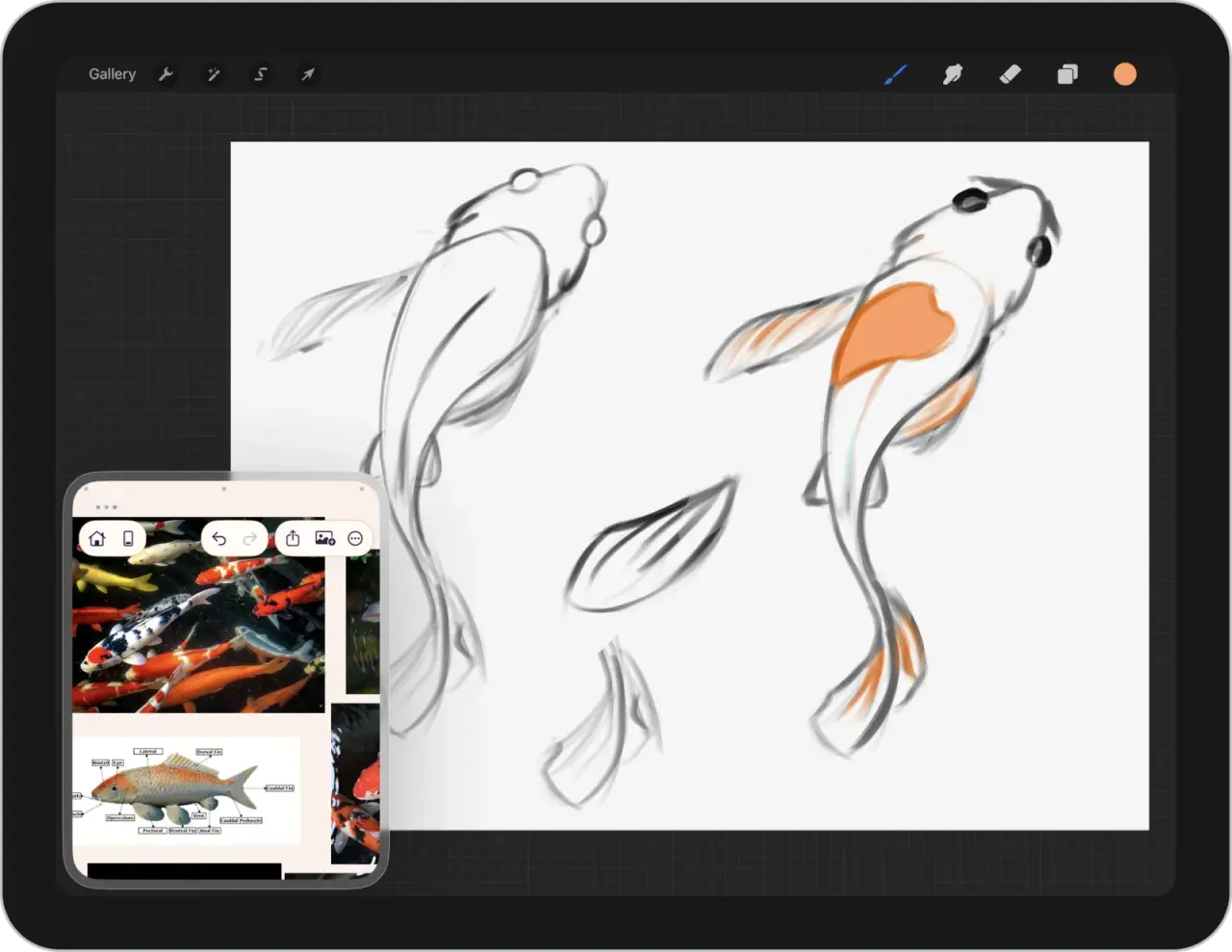
On iPad, ArtDeck opens next to Procreate, Fresco, or any other drawing app using Split View, Slide Over, or Stage Manager.
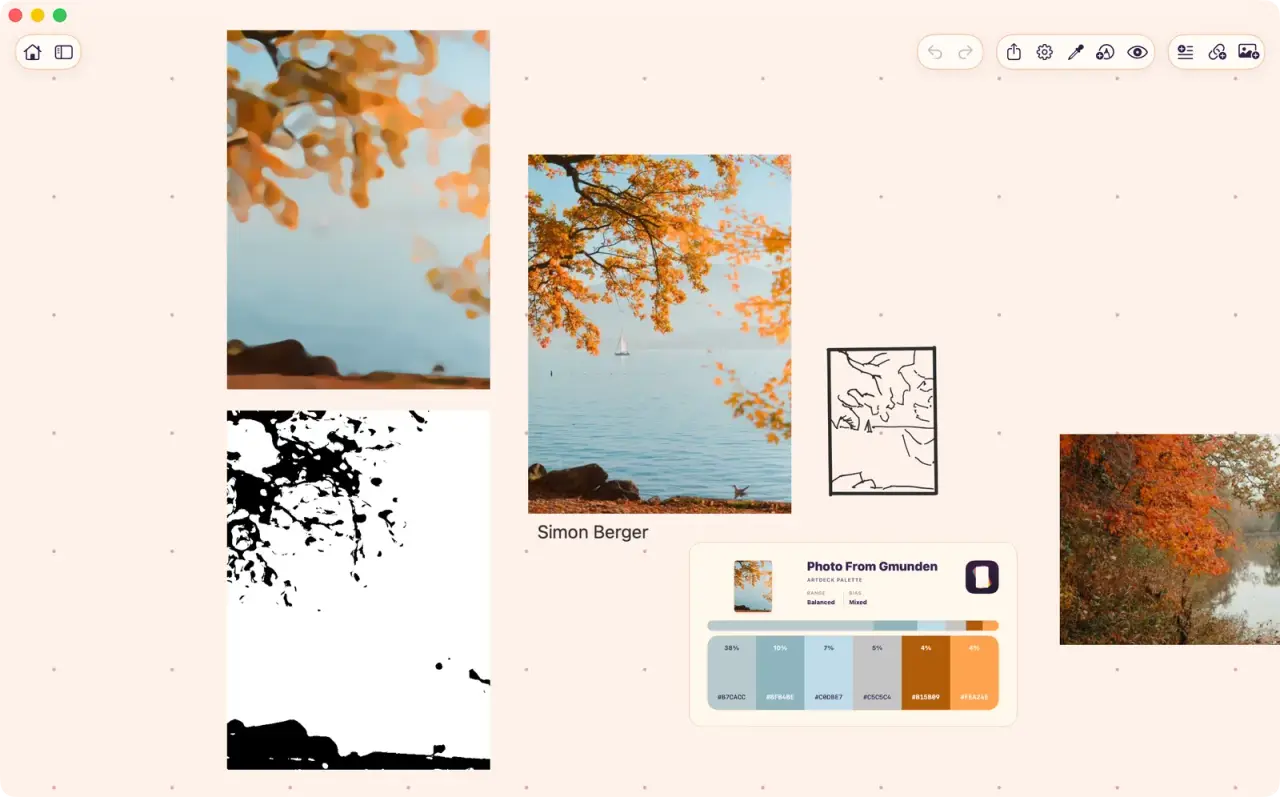
Pick a color off a reference and the hex code is on the clipboard for Procreate’s color panel. You can also copy one image or a selection and paste it straight onto the canvas. The study tools for values, color, composition, readability, measurement, and motion with onion skinning run over the reference on the same board, and a saved study stays next to its source. On Mac, the board can stay on top of other windows.
The same board syncs through your own iCloud to iPhone, iPad, and Mac, works offline, and costs one purchase after a seven-day trial. The Procreate reference workflow shows the window setup and the color handoff step by step.
PureRef 2.1.3 is desktop only. On Windows, Mac, or Linux its window can stay above every app or one chosen app, pass clicks through to the app beneath, or turn selected images into overlays. It has crop, grayscale, color picking, drawing, locking, and GIF playback. The ArtDeck and PureRef comparison covers moving a board across and the license difference.
Refbox is a desktop app first. On Windows and Apple-silicon Macs its references float above other apps, and its Box rearranges the media when you resize the window.
Its iPad app needs iPadOS 26.2, imports images only, and swaps .refbox files with the desktop app. Beside Procreate it is an image viewer, not the mixed-media board.
VizRef is an iPad board for images and GIFs that sits next to Procreate in Split View, with packing, crop, flip, grayscale, and GIF frame stepping. Its current version, 1.1.7, dates from June 2021. The VizRef comparison covers price, release history, and the study layer.
ImgRef’s free canvas has keyboard shortcuts, multi-item alignment, and magnetic guides. Notes, crop, grayscale, color analysis, layers, and link cards need the Pro subscription, so most of what makes a board more than a pile of images sits behind it. The listing mentions no floating window on Mac and no sync between devices, and moving a board means a manual backup and package import. Check the paywall and current reviews first. It fits an iPad too old for the others when the free canvas is enough.
None of the desktop window modes exist on iPad. There, every board sits in its own Split View, Slide Over, or Stage Manager window.
Choose a project board or a reference library
A working board belongs to one painting, sequence, or design. It holds the source images, footage, links, notes, and studies you need while making it.
If the broad collection lives on Pinterest, the Pinterest reference workflow shows how to shortlist one project’s sources first.
ArtDeck keeps that material on one board. You can group, nest, align, and lock items, keep a saved study next to its source, and find the project again later by label, favorite, or archive status.
Reference Board adds search and metadata to its board instead. Freeform and Milanote fit when the references are part of a larger shared canvas or a moodboard for a team, which the Freeform comparison covers.
Eagle is built around the library itself. Its browser extension grabs single images, screenshots, or a whole page and puts them into folders with tags as you save them. The desktop app adds smart folders, saved filters, ratings, duplicate checks, batch operations, and search by keyword, tag, color, shape, date, dimensions, or file type.
Pairing a library with a project board
Eagle and ArtDeck can work together on Mac, because a library and a project board do different jobs. Keep the long-term library in Eagle. For a new project, export the images you need, then drag or import them into an ArtDeck board next to the project’s links, notes, video, and saved studies.
The copy is one-way: Eagle’s tags, ratings, and later changes never reach the board, and a study you want to keep has to be exported back to Eagle by hand. So pick the images carefully at the start rather than importing a whole folder and pruning later. The library-to-project workflow covers the same handoff for folder-based managers such as Allusion.
ArtDeck’s labels help you find a project you already organized, but it has no OCR or similar-image search across the library.
Reference Board 1.5.4 goes furthest toward a library on Apple devices: folders, OCR, face and object recognition, color and similar-image search, natural-language search across boards, shared iCloud boards, and view-only web publishing. It needs version 26 of each Apple system, and it has no adjustable value bands, composition guides, measurement overlays, or onion skinning.
Check where the app runs
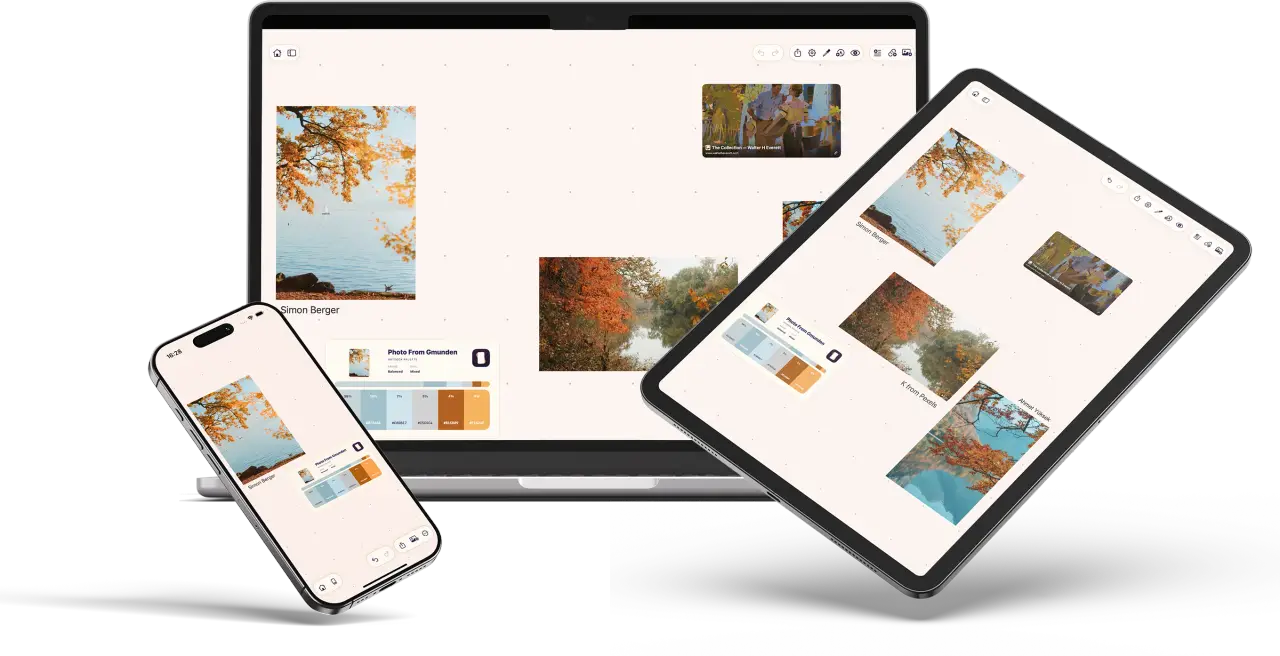
ArtDeck carries boards across iPhone, iPad, and Mac on iOS 18, iPadOS 18, and macOS 15 or later.
Running on a device is not the same as working well on it. Test how the app imports a source, how the board sits next to your drawing app, and how the project reopens on your second device.
Test the shortlist with one project
Most of these have a trial or a free tier. Reference Board and VizRef are paid up front.
Try the same project in one or two candidates. Include the file types you use and enough references to see how the board handles a busy layout.
- Import your material and arrange it beside the drawing app.
- Try a task you often repeat, such as finding a source, comparing images, or stepping through a clip.
- Close the board and reopen it later. Check whether the arrangement is easy to return to.
- If you use a second device, move or sync the project and check what carries across.
Notice where you have to work around the app. That may matter more to you than a feature you would only use occasionally.
Common questions
Which art reference app works next to Procreate on iPad?
ArtDeck, VizRef, and ImgRef all open in Split View beside Procreate. ArtDeck is the one that also holds video, PDFs, links, and notes, hands a sampled color to Procreate’s color panel, and runs study tools over the reference.
Which of these run on iPad?
ArtDeck, VizRef, ImgRef, Reference Board, Freeform, and Milanote, which makes them the PureRef alternatives on iPad. Refbox’s iPad app only imports images, and PureRef and Eagle are desktop only.
Is there a free reference board app?
Freeform, Milanote’s basic tier, Refbox Mobile, and ImgRef’s base canvas are free, and PureRef is pay what you want for personal use. ArtDeck, desktop Refbox, and Eagle have trials. Reference Board and VizRef are paid.
Can one app be both a library and a project board?
Yes. Reference Board combines a canvas with library search. Eagle focuses on managing an archive, while ArtDeck and PureRef focus on the current project board. You can use a library and a board together, but you may not need both for a small collection.
Do these apps sync between devices?
ArtDeck syncs through your own iCloud account. You can sync every board or only the ones you choose, it works fully offline either way, and you can clear its iCloud data from inside the app without losing the local boards.
Reference Board syncs through iCloud and can share boards. Freeform has one iCloud switch for the whole app, and Milanote stores boards in its own cloud. Refbox swaps .refbox files between desktop and mobile. ImgRef’s listing describes backup and package import, not sync. PureRef, Eagle, and Allusion save local files you move yourself.