

A Pinterest art reference board that has run for years was never meant to answer one drawing. It preserves years of good finds, but the grid cannot tell you which ones explain the light or construction in the piece on your desk.
Leave that archive intact and choose a separate working set for the current piece. It can hold the source page alongside each image, plus any notes or studies you make after collecting it.
Choose Pins by the question they answer
Ask what each Pin settles. Perhaps it shows the silhouette of a tree line, or the way wet leaves catch light. If you only know that an image is beautiful, let it stay on the discovery board until a piece gives it a job.
Move a useful Pin while you still remember why you stopped on it. Pinterest downloads images one at a time, and sorting the same Pins into a new section first only adds another pass, so for a project already under way, decide as you go.
Stop when a new Pin answers a question no better than something already on the working board.
Pinterest sections are handy when the project has not started yet, especially during a quick browse on your phone. Use one as a queue and empty it later. A name such as Leaves piece, October gives the queue an end; autumn can absorb new Pins forever.
Open the pin to reach the original source
Open the Pin and follow its destination when one is available. A Pin may show one photograph from a larger shoot or one work from a portfolio. On the destination page, you may find a better file and the name of the person who made it. Sometimes the image you need is elsewhere in the same series.
The close-up may also carry Pinterest’s AI modified label. Pinterest says it applies the label using IPTC metadata and its own classifiers; a content owner can declare AI use as well. A missing label does not establish that a person made the image, but a present one gives you useful context before you study its anatomy or materials. Pinterest also lets you ask for fewer AI Pins in selected feed categories.
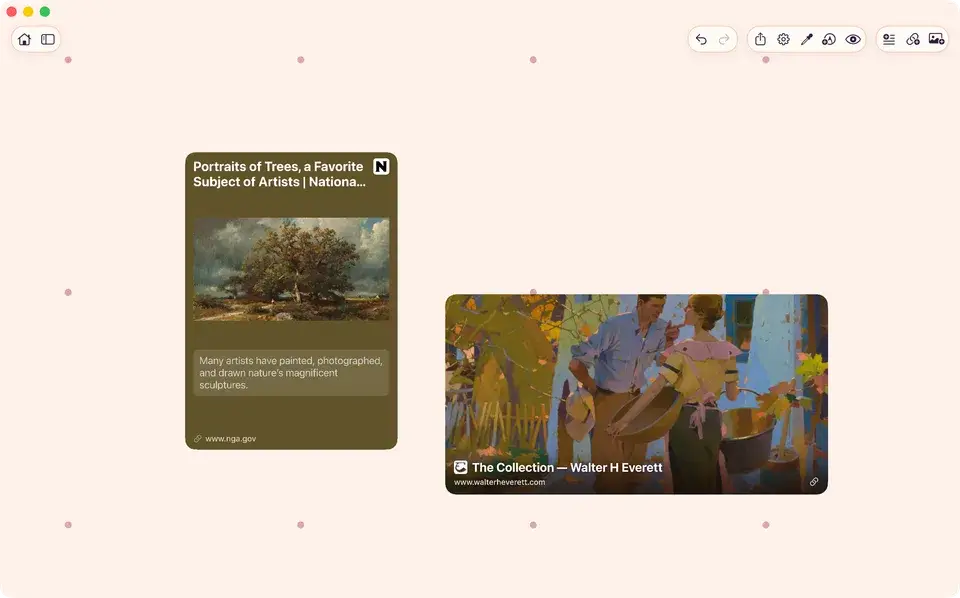
Save the destination as an ArtDeck link card when you may need it again. The preview and visible domain make the source easier to recognize months later. Keep the local image next to that card if you need both while working.
Arrange references by question, not by file type
On iPhone or iPad, use the Share menu to send a page or image to ArtDeck. You can also drag from Safari or Photos while both apps share the screen. A downloaded Pin lands in Photos. On Mac, drag the file onto the canvas and paste its source URL onto the same board.
Place each reference where you will use it. Put the anatomy next to the pose it explains, and keep a lighting reference against the material it illuminates. Sorting every photograph into one corner and every link into another only makes you browse the board again. ArtDeck’s canvas is freeform, so a busy cluster can become a group without moving away from its question.
A short note can preserve the reason you kept something. The fold at the elbow, not the color will help more later than the downloaded filename, or rename the image in the sidebar with it.
Study the references you kept
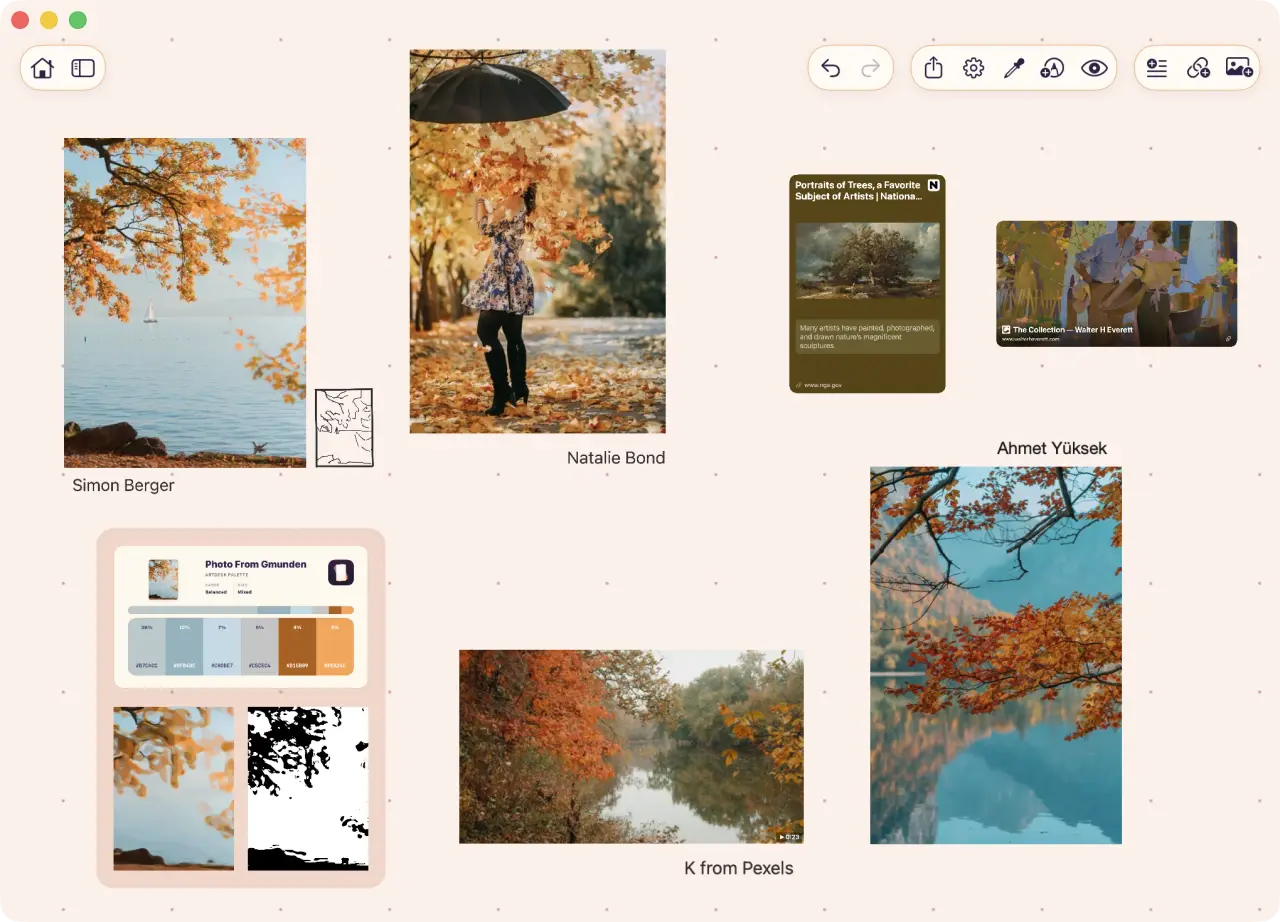
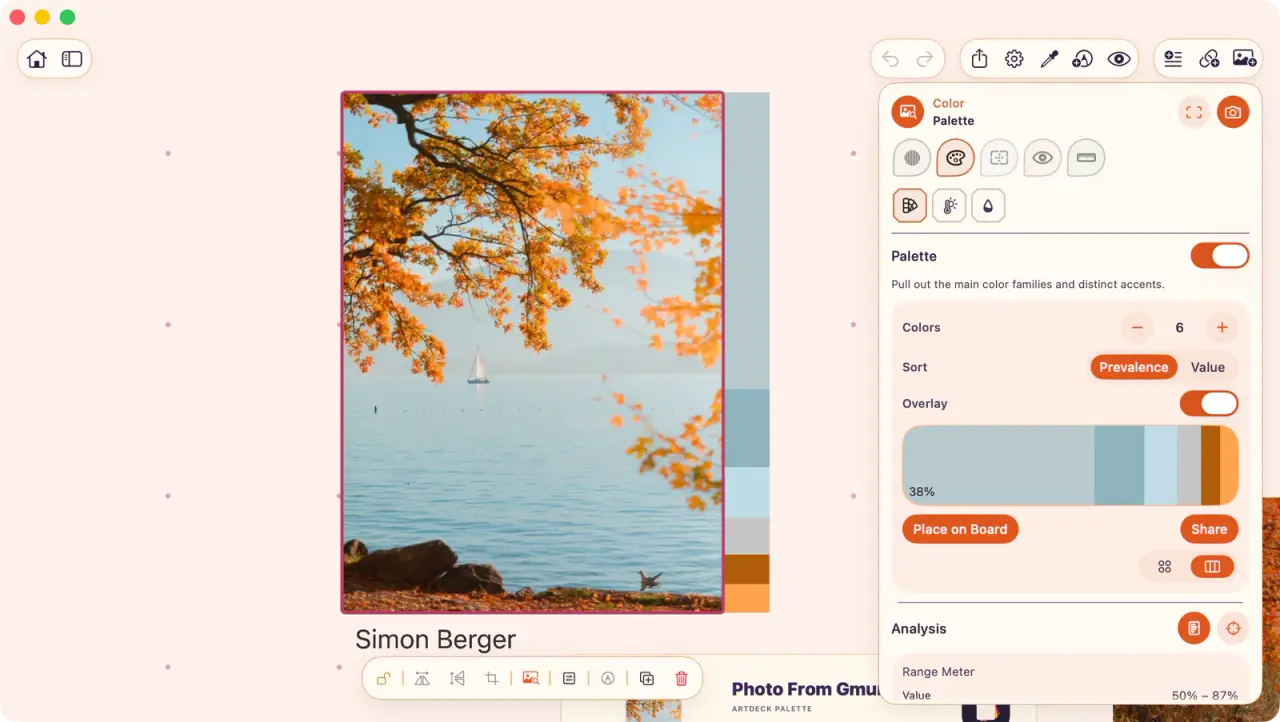
Sometimes you know the color works before you know why. Open ArtDeck’s Color lens and sort the extracted palette by prevalence. In the example below, the orange that seems to define the photograph covers four percent; a grey-blue occupies thirty-eight percent. That difference may change the palette you paint with.
The other study lenses answer different questions without altering the file. Values and Read show how the image holds together when detail falls away. Composition tests the structure, while Measure compares proportions. Save a useful result with its source and the board retains which photograph produced it.
The five-question reference routine uses the same approach for deliberate practice.
The board holds a copy of the pin, not a link to it
An image imported into ArtDeck becomes its own board item. It does not sync back to Pinterest, and later edits to the Pin do not change it. If the original Pin disappears, the imported image remains where you placed it.
A link card behaves differently because it still opens the live webpage and needs a connection. Local board material remains available offline. Keep the board on one device or use iCloud to carry it between iPhone, iPad, and Mac.
Return to Pinterest when the piece raises a new question. Bring back the best answer you find, along with its source, and continue working from the smaller set.
Common questions
Why not just work straight out of Pinterest?
You can. If the project needs only a few images and you can find them quickly, Pinterest may be enough. A separate board helps when opening the app for one reference turns into another round of browsing, or when you want your notes, studies, and images together. Pinterest can keep showing related material; the working board keeps the current selection still.
How many references should be on the board?
Do not choose a number in advance. Start with one reference for each open question, then add another when comparison would help. Stop when new images repeat answers already on the board. A character design will usually need a broader set than a single anatomy check, but neither benefits from padding.
The pin has no link, or the link leads nowhere. What then?
Try a reverse image search. It may lead to the portfolio or archive that the Pin lost, where you may find a larger image or more from the same series. If the trail still ends, keep the image if it remains useful and add a note that the source is unknown.
Can ArtDeck import a whole Pinterest board at once?
No. ArtDeck has no Pinterest integration or whole-board importer. Send each reference through the Share menu or drag it onto the board; paste the source URL onto the board when you want a link card. Choosing Pins one at a time keeps the larger archive in Pinterest and leaves ArtDeck with the working set.
Should I delete the Pinterest boards afterwards?
No. Pinterest says its recommendations draw on your saves and browsing activity, so the discovery boards can remain useful after one project ends. If you no longer want a particular board to influence the feed, turn off recommendations for that board or archive it. Pinterest disables recommendations for archived boards automatically.