

The short answer
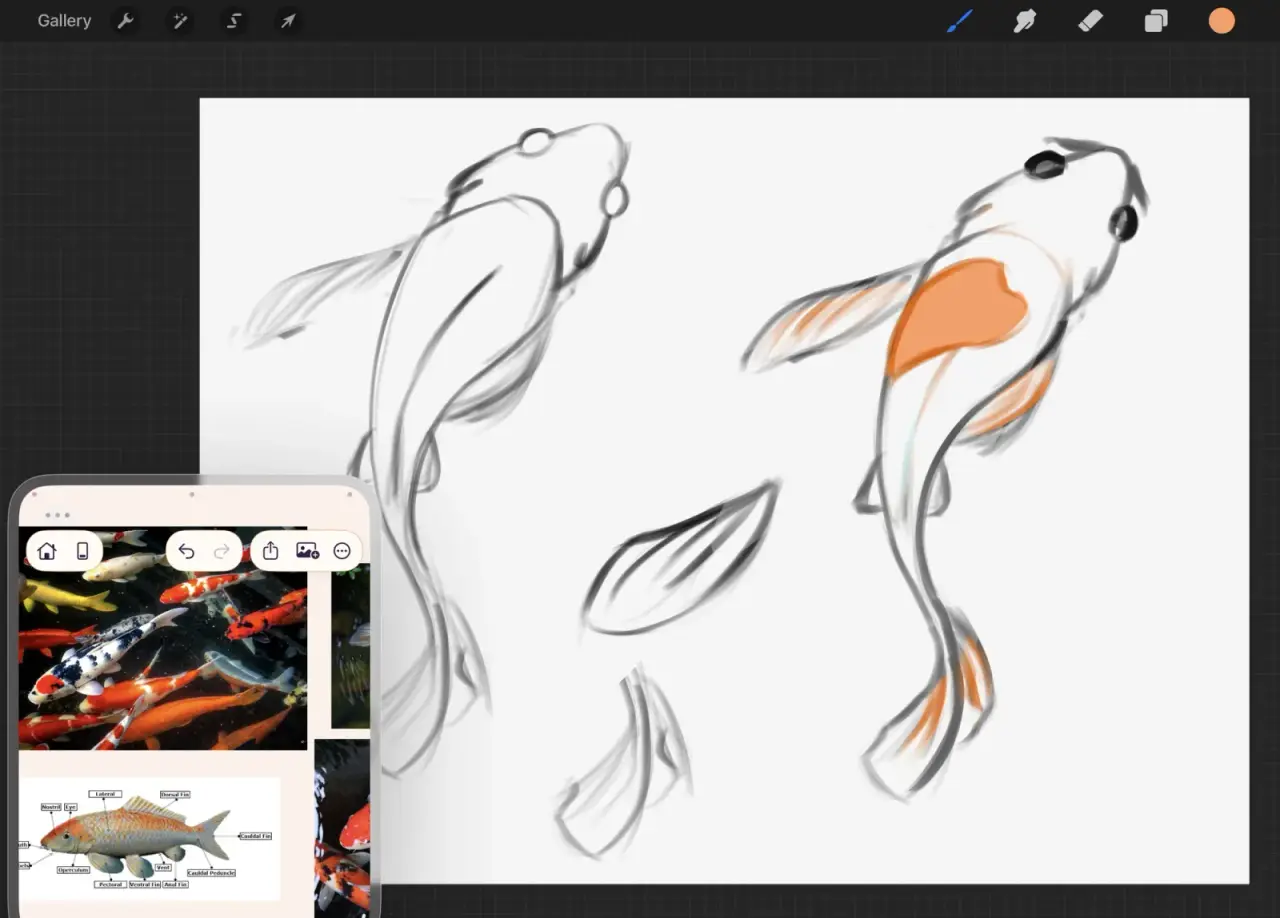
Use ArtDeck for a new board on a current iPad. Everything you do daily in VizRef is there, plus video, PDFs, links, notes, the same board on iPhone and Mac, and the study tools. Keep VizRef if the iPad cannot run iPadOS 18, or if an image-and-GIF board is everything you need.
| Decision | ArtDeck 1.1.4 | VizRef 1.1.7 |
|---|---|---|
| Current release | Version 1.1.4, September 2026. | Version 1.1.7, June 2021. No later release appears in the App Store history. |
| Arrange and organize | Align, distribute, match size, snapping, z-order, groups and nested groups, item locking, Pack, Tidy Up, undo, and redo. | Multi-select, automatic packing, board thumbnails, and Focus mode, which stops items moving as you pan. |
| Board content | Images, GIFs, video, PDFs, link cards, notes, drawings, and saved studies. | Images and animated GIFs. |
| Video files | Yes. Playback and frame-by-frame study. | No. Animated GIFs are supported instead. |
| Study tools | Yes. Values and Notan, color and palettes, composition, readability, measurement, and motion study with onion skinning. Save studies on the board. | No. Grayscale and GIF frame controls, but no analysis suite or onion skinning. |
| Devices and sync | iPhone, iPad, and Mac in one app. Keep boards in iCloud or on a single device. Both work offline. | iPad and Apple Vision. VizRef Lite for iPhone is a separate purchase, with no sync between them. No Mac version. |
| Access | Every feature for seven days, then one permanent App Store purchase. | A slightly lower price up front. VizRef Lite is sold separately. |
| Minimum system | iOS 18, iPadOS 18, or macOS 15. | iPadOS 13.2 for VizRef; iOS 13.2 for VizRef Lite. |
The canvas feels familiar
Both apps take batches from Photos and Files, accept images off the web, and let you select and move several items at once. Crop, flip, rotate, grayscale, and frame-by-frame GIF playback are in both. ArtDeck also takes items from the camera, a document scan, the clipboard, and the Share sheet.
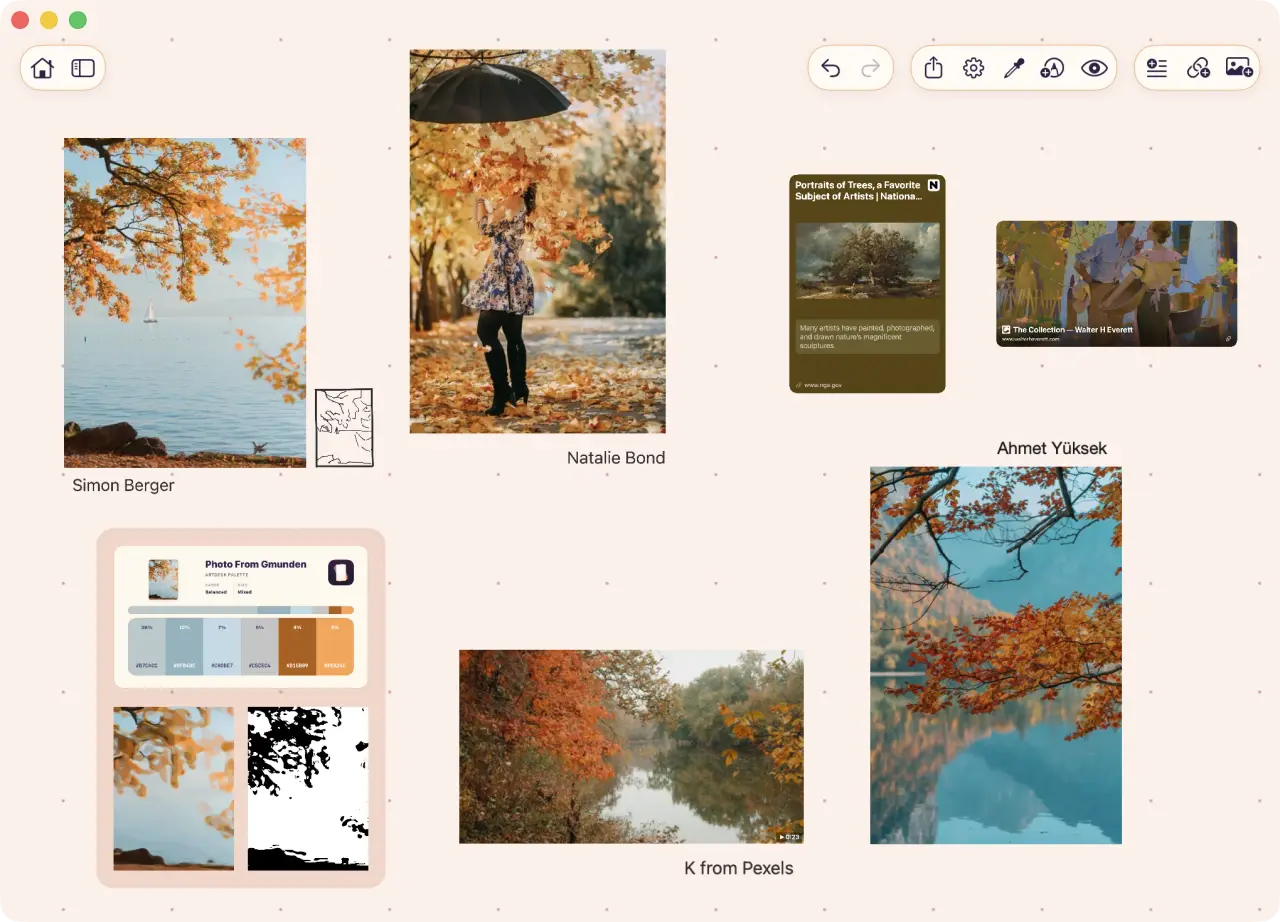
ArtDeck also aligns a selection to any edge or center, distributes the spacing, and matches width, height, scale, or visual size. Items snap to the grid, to one another, or to right angles. Group related references, nest one group inside another, lock what should stop moving, and undo any of it.
VizRef’s Focus mode hides most of the interface and stops an accidental touch from moving an image while you pan. ArtDeck locks individual items or whole groups instead, leaving the rest of the board editable.
Both run in iPad multitasking. ArtDeck opens in Slide Over, Split View, or Stage Manager next to Procreate, Fresco, Clip Studio Paint, or anything else, and on Mac, Keep on Top does the same job.
The board carries more than images
An image board starts collecting things that are not images: a tutorial left as a URL in Safari, a shot buried in a video, a PDF sitting in Files, and a note explaining why you kept any of it. VizRef’s feature list covers images and animated GIFs.
ArtDeck puts the rest on the canvas without flattening it into screenshots. A link keeps its preview card, a video its playback controls, a PDF up to 300 pages. Notes sit next to the image they explain. Draw over an item, or mark the canvas with pen, highlighter, and shapes. The reference board page lists every supported item.
GIF playback becomes motion study
VizRef’s GIF timeline pauses an animation and moves through it frame by frame. ArtDeck keeps that and adds video, so a phone recording or a film clip lives on the same board as a GIF.
Onion skinning draws the frames before and after the current one over it, with separate colors, opacity, sampling interval, and falloff. A line-art mode strips out the texture when the spacing between poses is what you need to read.
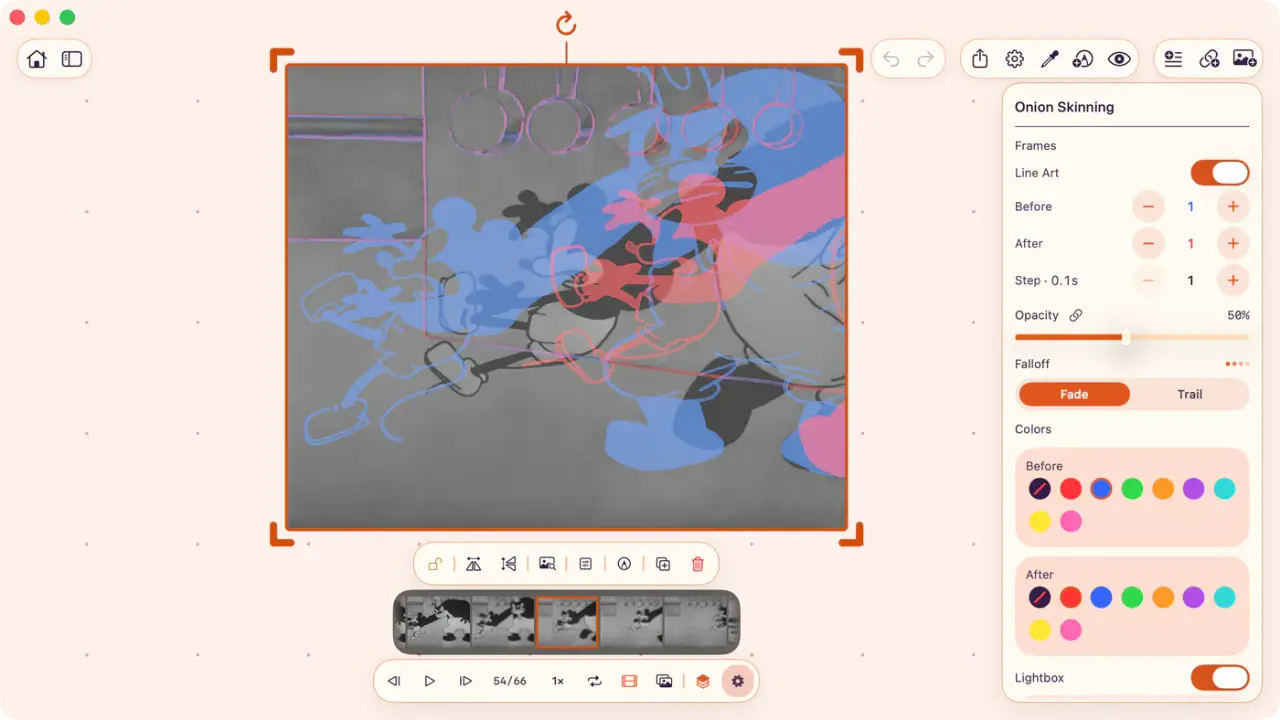
VizRef is enough for stepping through a GIF. Video, onion skinning, and saving a frame back onto the board are only in ArtDeck. The motion study page covers the frame controls.
One board, three devices
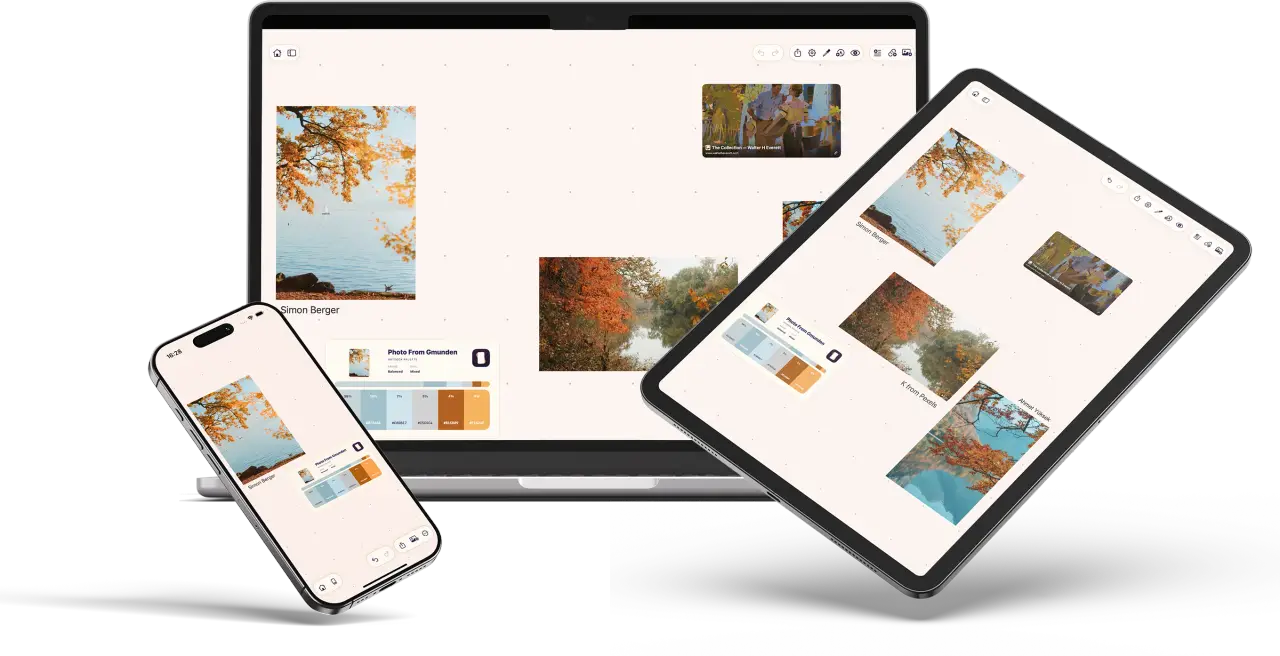
ArtDeck treats iPhone, iPad, and Mac as three views of the same library. Capture a photo on the phone, share the screen with Procreate on the iPad, then keep it above another app on the Mac. Your own iCloud carries the board, and a large or private board can stay on one device.
VizRef Lite puts the same feature set on iPhone as a separate purchase, and the official pages describe no board sync between the two. Both App Store privacy labels report no data collected, and ArtDeck adds no account of its own.
Study begins on the same canvas
VizRef gets the reference in front of you. ArtDeck also lets you check what you think you see in it.
Open Values to reduce an image to a grayscale ladder or a two-value Notan. Color pulls a palette out and shows how much of the frame each swatch takes. Composition overlays grids and tests crops, and Read flattens the picture to its large shapes. Measure adds plumb lines, angles, and proportions. Perspective places horizons and vanishing points over a still image, a video, or a GIF.
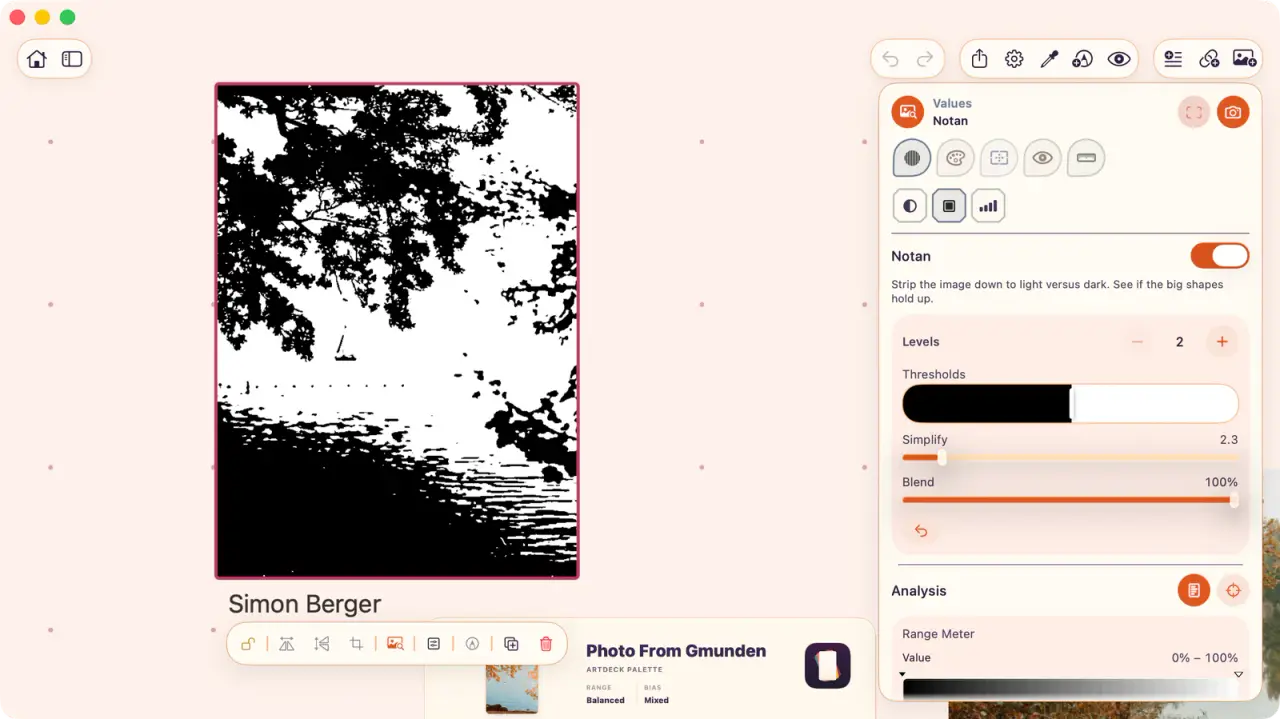
Every lens leaves the source untouched. Run one out of plain curiosity about why a photo works, then save the result on the board. The study tools page shows every lens and the Analysis panel.
Where each one fits
An existing VizRef board on an iPad that cannot run iPadOS 18 has no reason to move. Start the next board in ArtDeck when it needs more than one device, more than images, or studies saved with the references.
Where to keep the old board and where to start the next one
Keep the VizRef board existing archive or older iPad
- The iPad cannot run iPadOS 18.
- The board already does its job with images and GIF playback.
Start in ArtDeck current board and study workflow
- The same board should open on iPhone, iPad, and Mac.
- Video, PDFs, source links, notes, and drawings belong on the same board as the images.
- Value, color, composition, proportion, perspective, or motion needs studying on the board.
- You want a current app with a full trial followed by one permanent purchase.
Common questions
VizRef vs ArtDeck: what is the difference?
Both are native iPad reference boards for arranging images and GIFs next to a drawing app. ArtDeck adds video, PDFs, links, notes, drawing, study tools, and the same board on iPhone and Mac.
Does VizRef cost less than ArtDeck?
Yes, by a small amount in the current US App Store. VizRef is one paid iPad download, with VizRef Lite for iPhone sold separately. ArtDeck includes iPhone, iPad, and Mac in one permanent unlock after a seven-day full trial.
Does VizRef still work on current iPads?
Apple still lists VizRef for sale and marks it compatible with iPadOS 13.2 or later, but its last update is version 1.1.7 from June 2021. Test an important project on the iPadOS version you use before relying on it as your only reference board.
Is VizRef available on iPhone or Mac?
The full VizRef app is for iPad and can run on Apple Vision. VizRef Lite is a separate iPhone app with the same features but without iPad multitasking. There is no Mac version.
Does ArtDeck require a subscription?
No. The seven-day trial unlocks every feature and does not renew. One in-app purchase unlocks ArtDeck permanently across iPhone, iPad, and Mac.