

A board you have kept for two years stops being a collection at some point and turns into an archive. The download folder was emptied months ago, the phone that shot the clip has been traded in, and the copy sitting on the canvas is the one that still plays.
Then you need that file somewhere else, and the question is whether the board gives it back.
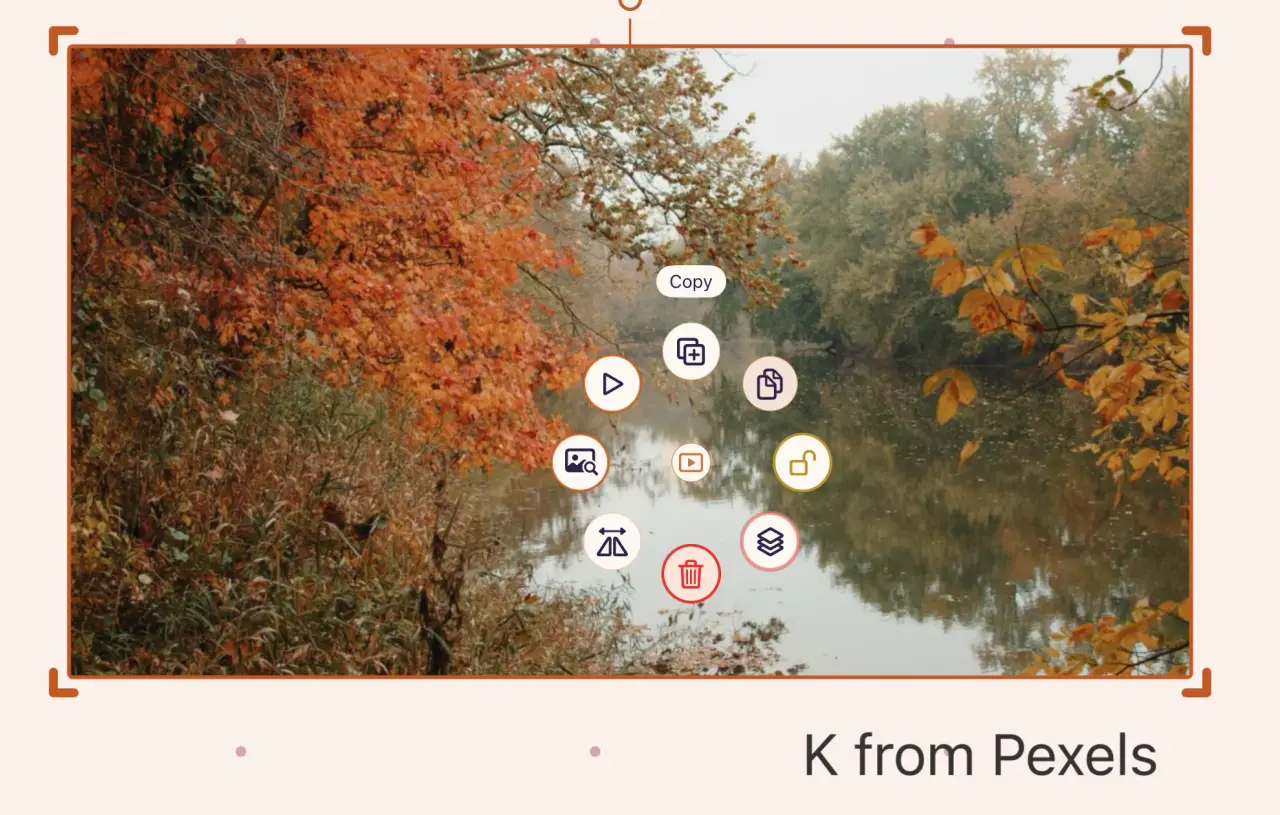
ArtDeck returns the media file stored inside the board. It may not match the bytes first imported: ArtDeck can transcode a video it cannot play natively or build an optimized import when you ask for one. Copy hands you that stored, playable version.
Copy works on one item at a time
On iPhone or iPad, tap the item until only that item carries the selection outline, then long-press it to open the radial menu and choose Copy. With a keyboard attached, press Command-C. On Mac, select the item and use Edit > Copy or Command-C.

Wait for the confirmation toast before you leave the board. A large video takes a moment, because ArtDeck reads the whole media file before it puts anything on the clipboard, and starting a second copy cancels the first.
I reach for this as a handoff more often than as a rescue. Pull a clip off the board, drop it into the project folder, and import it into the animation or editing app where the next few hours of work actually happen.
What Copy returns
The result depends on the single item you selected:
| Selected item | Clipboard result |
|---|---|
| Video | The stored video file as movie data, preserving its MP4, M4V, or MOV container where applicable. |
| GIF or other supported animated image | The stored animated file, with its animation intact. |
| Uncropped, unflipped image | The stored image data in its source format. |
| Cropped or flipped image | A new image containing the visible crop or flip. |
| Text | Styled ArtDeck text plus HTML and plain text for other apps. |
| Link card | The destination URL as text. |
| Color swatch | Its hexadecimal color value. |
Copy keeps a single item’s usable contents whenever ArtDeck can point to one source file. Crops, flips, and larger selections are rendered instead.
Freeform handles copied items differently. Apple’s current guide says pasted board items arrive in Mail or Files as PNGs, while its board-level exports are a PDF or a link to an editable copy. Those methods preserve the look or editability of a board, but they do not recover a playable reference clip.
Freeform’s embedded originals are still recoverable on a Mac. They sit as ordinary files in the app’s group container, and a short script can read them out. It takes more work than copying a selected item in ArtDeck.
Paste it somewhere you control
On iPad, open Files, go into an On My iPad folder or an attached drive, press and hold an empty area, and choose Paste. You can also paste straight into an app that accepts movie or image data. On Mac, paste into Finder or into the destination app.
The receiving app decides which clipboard types it will accept, so a greyed-out Paste usually says more about the destination than about the copy. Go through Files or Finder first and import the saved file from there.
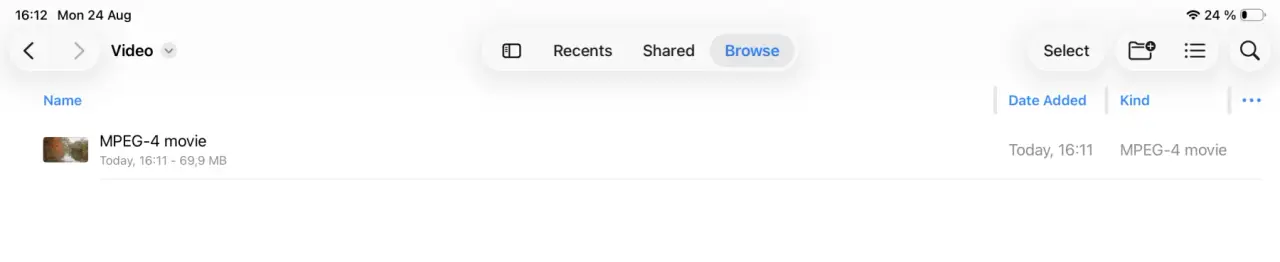
Open the pasted file before you delete anything from the board. Check that it plays and that the duration looks right, especially if the board holds the only surviving copy.
Rename it while you are there. A clipboard paste arrives with a generic name, and three recovered clips in one folder look identical an hour later.
A crop is an edit, and Copy respects it
An uncropped, unflipped image copies in its stored format. After a crop or flip, Copy returns the visible edit. The untouched image remains available through Reset to Full Image.
To recover the full image, duplicate the item, choose Reset to Full Image on the duplicate, and copy that one. Delete the duplicate once you have opened the pasted file and confirmed it.
With a mixed or multi-item selection, ArtDeck renders the arrangement as a transparent 2K PNG. This preserves the positions in a form other apps can paste. A selection made only of link cards is the exception: it copies the destination URLs as a line-separated list.
Recover media one item at a time, and use multi-select only to share a picture of the composition.
One file at a time is not a backup plan
Copying one asset is a quick handoff and a miserable backup plan for a board holding fifty files you cannot replace.
Open Export and save the Full board backup as an .artdeck file. That preserves the board for ArtDeck to restore, items and arrangement included. Keep one copy somewhere other than the device that holds the working board. The format that file uses is a package you can open with any archive tool, so the media inside stays reachable even without ArtDeck in front of you.
The reference board feature page covers the rest of what a board can hold. If the clip you just recovered is motion reference, the frame-by-frame workflow shows how to slow it down, step through it, and save a useful frame without touching the source.
Common questions
Does Copy export the current video frame or the whole video?
The whole stored video file. Use Export Current Frame when what you want is a still of the frame on screen.
Can I recover the original image after cropping it on the board?
ArtDeck still holds the full image behind the crop, but Copy honors the visible edit. Duplicate the item, reset the duplicate to the full image, copy that, then remove the duplicate once you have checked the file.
Can I copy several original videos at once?
No. Selecting several videos produces a rendered PNG of the arrangement. Copy each video separately, or keep a full .artdeck backup and restore from that.
The board is on a device I no longer have. Can I still get the files?
Only from a copy. A board that lived on one device with sync off went with the device. This is the argument for exporting an .artdeck file to a second location while the board is still in front of you, rather than after.